
Data mining and machine learning are two foundational disciplines in modern data science and enterprise business intelligence. While both fields focus on analyzing data to extract value, they approach the task with different techniques, levels of automation, and end goals.
Understanding the distinction between data mining and machine learning helps organizations design better data pipelines, automate decision-making processes, and extract actionable insights from big data.
What is Data Mining?
Data mining is the computational process of discovering hidden patterns, anomalies, correlations, and actionable structures within large datasets. It draws heavily on database management systems (DBMS), statistics, and artificial intelligence to transform raw data into structured knowledge.
In data mining, human analysts set explicit conditions and queries to examine historical data. The primary objective is to describe past trends and establish rules that explain existing behavior rather than making autonomous decisions. For example, a business might mine historical customer order data collected using a scraping agent to evaluate seasonal purchasing trends and optimize inventory distribution.
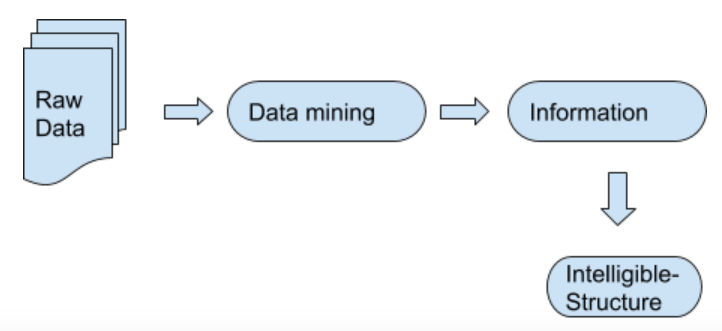
Core Components of Data Mining
- Data Preprocessing: Cleaning noisy, missing, or inconsistent data from large enterprise databases or data warehouses.
- Pattern Discovery: Utilizing techniques like clustering, association rule mining, and classification to uncover underlying relationships within static datasets.
- Knowledge Evaluation: Presenting mined patterns to human decision-makers using statistical reports, visual graphs, and summary dashboards.
What is Machine Learning?
Machine learning (ML) is a subfield of artificial intelligence (AI) focused on building algorithms that learn from data and improve their performance over time without being explicitly programmed for every scenario. Instead of relying solely on static human-defined rules, machine learning models analyze training data to learn mathematical functions capable of making autonomous predictions on unseen data.
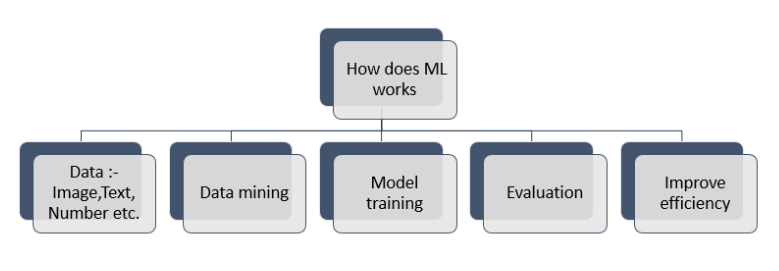
Machine learning systems continuously refine their internal parameters as new data flows into the system. Common applications include natural language processing, automated image recognition, predictive fraud detection, and real-time recommendation engines. Advanced workflows, such as web scraping with AI, leverage machine learning models to automatically parse, classify, and extract unstructured web page elements without requiring manual CSS selector definitions.
Core Components of Machine Learning
- Training Datasets: Feature sets and target labels used to train statistical models.
- Algorithmic Learning: Optimization techniques (such as gradient descent and backpropagation) that adjust model weights to minimize prediction errors.
- Autonomous Inference: Applying trained models to incoming live data to generate real-time classifications, scoring, or decisions.
Key Differences Between Data Mining and Machine Learning
While both fields operate on large volumes of data, their execution models, degree of human involvement, and ultimate objectives differ fundamentally.
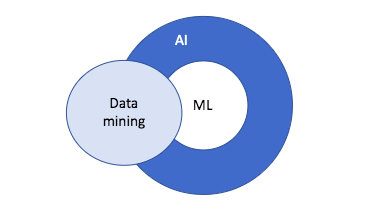
1. System Architecture and Methodology
Data mining relies primarily on relational databases, data warehouses, and statistical queries to analyze historical records in batches. In contrast, machine learning utilizes neural networks, probabilistic models, and optimization algorithms designed to process inputs, make predictions, and adapt dynamically.
2. Human Intervention vs. Autonomous Self-Learning
Data mining is a human-centric, semi-automated process. Data analysts design the extraction parameters, select specific features, and manually interpret the discovered patterns to guide business strategy.
Machine learning minimizes manual effort once the training pipeline is defined. The algorithms self-adjust when exposed to fresh data streams, executing decisions autonomously without ongoing human interference.
3. Purpose: Descriptive vs. Predictive Analytics
Data mining focuses on descriptive analytics—explaining what happened in past historical datasets. Machine learning focuses on predictive and prescriptive analytics—forecasting what will happen next and taking real-time action.
For instance, data mining can examine past ride-hailing transaction records to identify high-volume pickup locations. In contrast, ride-hailing services like Uber or Ola deploy machine learning models to predict real-time Estimated Time of Arrival (ETA) and dynamically calculate surge pricing based on current traffic and demand conditions.
4. Origins and Historical Development
Data mining emerged in the late 1980s and 1990s alongside the growth of enterprise database systems, statistics, and Knowledge Discovery in Databases (KDD). Machine learning traces its roots back to early artificial intelligence research in the 1950s, starting with foundational work by computer scientists like Alan Turing and Arthur Samuel’s early self-learning programs.
Direct Comparison: Data Mining vs. Machine Learning
| Feature | Data Mining | Machine Learning |
|---|---|---|
| Primary Goal | Extract patterns and knowledge from static historical datasets | Construct algorithms that learn autonomously to predict future outcomes |
| Origin & Era | Knowledge Discovery in Databases (KDD) and DBMS (1980s–1990s) | Artificial Intelligence research (1950s) |
| Execution Model | Batch execution on historical or warehouse data | Real-time execution, continuous learning, and online inference |
| Human Involvement | High; requires analyst interpretation and parameter definition | Low (post-training); adapts and executes automatically |
| Data Sources | Structured/unstructured database stores and historical logs | Training datasets, sensor streams, live user events, and feedback loops |
| Nature of Output | Reports, statistical models, rule sets, and visualizations | Predictive scores, autonomous actions, and automated classifications |
| Core Techniques | Clustering, association rules, anomaly detection, classification | Supervised learning, unsupervised learning, reinforcement learning, deep learning |
| Real-World Examples | Market basket analysis, historical risk reporting, customer segmentation | Real-time spam filtering, self-driving vehicles, fraud detection, recommendation engines |
Real-World Applications and Synergy
Data mining and machine learning are frequently combined within enterprise data strategies. Organizations use data mining to prepare datasets and understand historical contexts, and then feed those insights into machine learning models for automated decision-making.
1. E-Commerce and Retail Strategy
Retailers use data mining to analyze past point-of-sale transactions, discovering product co-occurrence rules (e.g., customers who buy printers frequently buy specific paper brands). This guides store layout planning and catalog design.
Machine learning takes this further by powering online recommendation engines. When a customer browses an e-commerce platform, ML models analyze their active session, past browsing history, and real-time clickstreams to surface instant product recommendations. Enterprise teams often run competitor price monitoring workflows to mine market prices across competitors, providing clean input data for machine learning models that execute dynamic repricing strategies.
2. Financial Services and Fraud Prevention
Banks apply data mining to perform historical portfolio analysis, risk reporting, and regulatory auditing across millions of stored account ledgers.
Machine learning powers live transaction monitoring. When a credit card is swiped at a terminal, machine learning models evaluate hundreds of contextual features (transaction amount, geography, device signatures, time) within milliseconds to detect and block fraudulent activity instantly.
3. Healthcare Diagnostics and Patient Care
Data mining enables medical researchers to cross-reference historical patient files to identify statistical links between patient demographics, underlying conditions, and treatment outcomes.
Machine learning assists medical professionals in real-time diagnostics. Deep learning models trained on millions of annotated medical images analyze X-rays, CT scans, and MRIs to flag potential abnormalities or tumors with high precision.